Friday, August 26, 2011

Chunky beer

One of the descriptors I use in writing and talking about beer is that it's "thin," and I thought perhaps that bears some clarification. It could be a function, I suppose, of viscosity, but more than that, it's the way the flavor sits on the tongue. A thin beer washes out and leaves very little taste to savor after it's done. By contrast, a nice complex, deep, and full flavored beer has layers of different flavors to dig through. Sometimes what I want is a thin, uncomplicated beer, like a Sam Adams Light (a review for another time) or even a Budweiser. But I had to go pretty far back in our blog archives to find a thin beer that I actually enjoyed - most of the time, I want something that tastes beery, that tastes of grain and hops and malt and sometimes of vanilla, coffee, or dark chocolate.

This next beer is one that, in truth, I had a tough time with. I've liked Abita Beer ever since being clued in to their existence by a law school friend from New Orleans. What gets exported to up north is often a mystery, but much of what I've had (Amber and Turbodog) are quite nice. Purple Haze, not so much.

Not a bad looking beer, and quite a nicely designed label.

Anyway, they brew a series of Harvest Beers designed to highlight, as they say, "the finest Louisiana-grown ingredients." One of these is a Satsuma Harvest Wit. Satsumas are delicious: they're little mutant oranges with loose skins and amazingly sweet juice. My girlfriend's mother grows them atop a hillside outside of Los Angeles, and they are without a doubt some of the best citrus I have ever tasted. Amazing. So when I saw beer made with Satsumas, I was intrigued.

It poured a very hazy gold color, with not a lot of head. There's an orangy aroma, but lacking in the brightness that differentiates a satsuma from, say, a navel. Definitely also a characteristic sourness on the nose that wheatbeers can sometimes take on.

The first thing I noticed was that it was very highly carbonated, which surprised me, given the lack of head. The second thing I noticed was that the flavor of the citrus didn't come through at all. The aroma was what pushed the flavor into the realm of oranges: without smelling a clearly orange scent, I don't think I would have automatically thought of satsumas while tasting this beer. Otherwise, kind of a middling beer.

OK, that's just gross.

I tend to pour pretty aggressively, and I like a bit of sediment in my beer, as I think there's quite a lot of flavor to be had in spent yeast (just ask the good people at Marmite). But I was unprepared for exactly how "chunky" this beer was. On a lark, I held the beer up to the light. Shocking.

Tuesday, August 23, 2011

Victory is mine.

Sometimes it's good to have a nice, light beer. Something that's not too heavy, something that's not too aggressive. Something flavorful, but which plays nice with others.

A few of the most recent beers I've written about are not those kinds of beers. Those are beers that obliterate the food with which they are enjoyed, and they blow out the palate pretty aggressively. That's not always a bad thing, but sometimes it's nice to taste your food too.

Especially when the food is a nice, juicy, perfectly cooked burger at Mel's Burger Bar by Columbia University. I went with my brother and was very pleasantly surprised to find a pretty fantastic burger and tater tots. I'm totally a sucker for tater tots.

Victory is delicious

Pennsylvania's own Victory Brewing Company makes a wonderful pilsner called Prima Pils, which I've seen in stores but never purchased. Pilsner lagers aren't always that appealing to me: I tend to like darker beers with more oomph behind them. But that day, I was in a lager-y mood and just wanted something refreshing. And the Victory Prima Pils was damn near perfect and full of surprises.

Sometimes I'm so thirsty, I forget I need to take a picture before drinking half the beer.

I got a lot of grass, hay, and flowers right up front as I approached the beer. The aroma was pretty heavy, which is another thing I don't tend to find with a pilsner. It was a clear golden pour with a thin head (what you see in the picture is after a wait for the burgers), which didn't last long (nor did it lace at all). Pre-burger, I tasted a lot of hops and honey, with maybe an undertone of sweetness. It made the tater tots pop as well, since the grassier flavors and aromas of the beer accentuated that lovely golden-brown caramelized potato goodness. And with the burger, the hops were strong enough to cut through the juicy fat of the meat. Overall, couldn't have asked for more.

Monday, August 22, 2011

Hong Kong

So I'm in Hong Kong for another 9 hours. I've been here for the weekend and a bit more attending to some family business, and I had a hankering for a beer while I was here. Small problem: Hong Kong doesn't really have a craft beer scene to speak of. Like seriously. NOTHING. You know what's everywhere? San Miguel and Carlsberg. Gross.

What they do have is a bar in Causeway Bay called East End Brewery, which isn't a brewery at all. They do serve Brooklyn Brewery products though. But really, did I go from Newark to Hong Kong to drink Brooklyn Lager?

The names of the house beers are on the ceiling.
Not on the taps, not on the menu, but on the ceiling.

Their house beer is HK$52 per mug, and during happy hour, it's two for one. Just pulled up the menu and it's supposed to have been HK$48 per mug. I totally got hosed out of HK$4. Or as it is known in America, 50¢ US. Bastards. Anyway, it's made by Hong Kong S.A.R. Brewing Co., a company that doesn't even have a website.

Aldrich Bay Pale Ale. I'm pretty sure...

I tried the Aldrich Bay Pale Ale. It's, um, pale, I guess, even though it's the darker of the two beers? Also, not very flavorful. Also weak (below 5%). Poured a decent orange color with a good creamy head. No aroma of hops though, which is one of those things that should be apparent in a decent pale ale.

Decent lacing on the Aldrich Bay.

Flavor was bready, with a sweet finish that was pretty nondescript. Basically, like white sugar. Not much to recommend it. Boring, really.

Too Soo Brew. What does that even mean?
And can you tell the difference between this one and the Aldrich Bay above?

Second, there was the Too Soo Brew. It was a touch more pale (it's a lager), but it had everything a hot climate like Hong Kong needs: refreshment and lightness and a reasonable ease of drinkability. Bud Light tried to tout its "drinkability" last year. What that campaign sounded like was "we're too afraid to make beer taste like beer." But unlike Bud Light, Too Soo tastes like beer, just like a pretty light beer.

Too Soo - no head retention, no lacing. But free bar peanuts, so... yay?

It's more crisp on the finish than the Aldrich Bay, but put the two side by side, and they look virtually identical. Like people from Hong Kong. That's racialist.

Anyway, East End Brewery isn't a bad place on its own. It's got a good beer selection and both English Premier League and Major League Baseball on the TVs. It suffers from one basic problem: it's in Hong Kong, and the Hong Kongers just don't really care for beer enough to make it worthwhile to microbrew.

ps. The dateline for this post is going to show up as California Time (thanks, Mr. West Coast). But let the record show that this post goes up on Monday, August 22, 2011 at 11:38 pm local time, Hong Kong.

Sunday, August 21, 2011

Heavy

Yesterday, I intimated that the "more equals more" trend in brewing may have been distinctly American. I didn't mean to imply that at all. I *do* think that American brewers tend to be more aggressive with their hops profiles, which does throw things out of balance. But a different trait that is shared on both sides of the Atlantic is a "more equals more" philosophy as it pertains to alcohol content.

Wine critics have been on this bugaboo for years, bemoaning the rise of big and punchy California red wines with tremendous alcohol contents. They say that the alcohol flavor masks the subtle nuances of the wine while the burn of the alcohol aftertaste scorches the palate. They're not wrong.

In beer, the movement toward higher alcohol contents has been going strong, and while the first "tripel" was invented in Belgium (of course it was), the genre has been enthusiastically adopted by brewers from Alaska to Scotland. Although one of these days, I'll have another Westmalle, the tripel that started it all, I recently had the pleasure of trying two of the strongest brews I've had in a while.

The Harpoon Leviathan series is designed to mess with people, or at the very least, to seriously mess people up. While most of Harpoon's other offerings are well-balanced and refreshing, the Leviathan series takes its cue from its namesake: they are big, bold, truly "one is enough" bottles.

Barleywine. It's got a kick, but it's still well-balanced.

The Barleywine (10.00%) poured a deep chestnut brown, with a wispy head that dissipated quickly. I poured it into a goblet-shaped glass, as I wanted it to warm a little and release some of its aroma. That aroma ended up being a very enticing caramel, with the alcohol hit of a red wine. The flavor was intense: a lot of ripe dark fruits (figs, raisins, cherries) and yeasty, like a heavy English bread. The alcohol, as expected, was incredibly spicy, which was nicely balanced by the toffee / brown sugar flavors. Outstanding. I definitely felt it by the end of the first glass (I got one and a half servings out of that 12 oz. bottle), and I definitely cannot recommend that anyone should have more than one bottle of this at a time. Still, it's quite tasty, and makes for a nice treat.

Quad. A little too much.

I wish I could say the same about the Leviathan Quad (11.75% ABV). I actually drank this one first, which was why I made the mistake of pouring the whole thing into a tall pint glass. Nice head retention though. This allowed the beer to warm too fast, and the whole affair got sour pretty quickly. I found this one less balanced - the sweet ripe fruit flavors and spicy alcohol kick were unmistakeable, but there wasn't enough backbone to stand up to it. I like my Quadruppels a good deal warmer and rounder - the alcohol in this one was angular and hot. I did appreciate the extra flavor of vanilla, but that was an extra flavor that didn't quite mesh with the rest of the sip.

Harpoon makes a Leviathan Imperial Stout as well. I've had it before but can't remember much of it. Perhaps another one to try.

Saturday, August 20, 2011

More is... more?

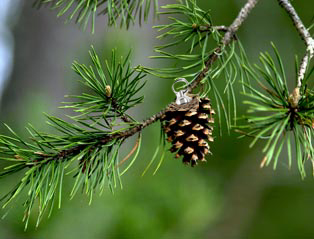
A typical complaint I've had over the years is a reaction to the idea, especially in American brewing, that more equals more. Hops add flavor, so if we consider that American macrobrews (Budweiser, Miller, Coors, etc.) lack that flavor, then more hops equals more flavor. Sam Adams runs an ad that says they put a full pound of hops in every batch of their (I think) Boston Lager. But of course, there are other things that add flavor besides hops, because more hops will probably only mean more hops flavor. On the far end of this spectrum are beers that end up drinking like pine cones.

delicious...
Hold still: I want to beat you about the face with this branch while you chew on a pine cone.

Among these is the Goose Island IPA. Out of Chicago, Goose Island picks up on a great Midwestern brewing tradition, though they've been in the news of late for moving productionof their signature 312 Wheat (named for Chicago's area code) out of Chicago entirely.

Now, I'm not here to pile on Goose Island for their business practices. I'm here to drink their beer. And drink it I have. The IPA pours a hazy dark gold with a nice fluffy head that traps a lot of wonderful grapefruit/lemon hops oils. That haze isn't a function of leaving the beer unfiltered: rather, this is probably due to the sheer amount of hops that are added. I also smell some pine as well.

Not a bad pour. And a classic looking label too.

The flavor is instantly bitter and sharp, like sticking my face into a pine forest and licking the branches. It's refreshing, in as much as being smacked in the head with a Christmas wreath could be refreshing. I honestly couldn't taste anything else after finishing half a bottle. With that in mind, I ended up drinking the rest of the bottle. And then another, and then another. Genius marketing strategy, Goose Island. I'M ONTO YOU.

Friday, August 19, 2011

Summer Beer Gone Awry

I've written before about my contempt for Leinenkugel's Summer Shandy. I hadn't heard of Shandy until I went to the UK - it's basically a mix of dry lemonade (a lemon soda that's got very little sugar in it, like an un-sugared 7Up) and cheap lager. Shandy, when made well, is refreshing and delicious: it's low alcohol, and the lemon flavors do elevate the lighter grassier notes of the lager.

Leinenkugel's on the other hand, sucks. A friend of mine ordered one over dinner while I went to the men's room. Why she did so is quite beyond me - we have had previous problems with Leinenkugel's products before. I seem to remember her and her roommate trying desperately to pawn off Leinenkugel's Honey Weiss to no avail, and eventually throwing out the remains of the case someone had purchased. It's pretty terrible.

Looks gross. Smells gross. Tastes gross.
Don't order this beer.

So this Shandy. Good lord. First of all, it came in the Boston Beer Co.'s glass for Sam Adams Lager, but it wasn't helped at all. Secondly, as you can see, it poured the color of dirty dishwater. The aroma was all sour lemon and white bread. In a normal shandy, one should smell a sweet lemon perfume. Here, it was like the lemon smell of churning stomach acid reminiscent of an aggressive college night out.

Flavor? Beer mixed with lemon pledge. Not pleasant at all. Gross.

Thursday, August 18, 2011

Proust! Or was it Prost?

Flavor is an amazing thing. While there is certainly something to the idea that smell is the most powerful sense (I seem to recall reading somewhere that the part of the brain that negotiates smell is conveniently close to the part that holds the deepest memories), it's also clear that the sense of taste is so closely related to smell that I'm going to lump it in there as well. Involuntary memory is pretty amazing stuff, really.

After all, while the tongue can distinguish perhaps six flavors (sweet, salty, bitter, sour, umami [assuming one believes in it] and hot), the majority of flavor distinction is found when the nose is involved. Block up the nose (hello allergies!) and food just doesn't taste the same.

So one of my great disappointments living in the tristate area is that I can't get Oberon, a lovely summer beer native to Michigan. I am told that it is available in Pennsylvania, but even I'm not willing to drive that far. Seriously - somebody get on importing this stuff to New York / New Jersey. During a long layover,* I had an opportunity to go back to Ann Arbor, Michigan and knew immediately what beer I was going to have first.

The color of a Michigan summer.

Oberon is a cloudy yellow peach color. Often, when poured aggressively, it develops a nice thick head. Our waitress was being trained, and I don't think she was willing to pour my beer with the right vigor. Too bad. Anyway, Bell's is a native Michigan company, and while I'm not wild about all of their beers, Oberon is a perennial summer favorite. The color, aroma, and flavor are enough to transport me back to the good days of law school (and some of the bad ones too).

There's a lot of wonderful citrus in this beer: grapefruit and bitter orange peel come through the aroma. The flavor, on the other hand, is overwhelmingly herbal: it starts out with grass and hay before moving to a floral sourness that refreshes. The one thing I found odd was that the mouthfeel was thinner than I remembered. And toward the end of the sip, I could have sworn I tasted some bubblegum.

Taps, glorious taps. Plus a huge selection of whisky and other alcohols.

Following a delicious lunch, my friend and I invoked yet another memory with a pint at Ashley's. I spent many, many afternoons and evenings at Ashley's, which is a lovely beer bar right on State Street in the heart of Ann Arbor. The place memories are fantastic - this is where we celebrated getting jobs, finishing exams, fatherhood, and friendship. A group of three of us even went to Ashley's in our caps and gowns on the morning of our graduation.

This is a happy place.

As you might imagine, the smell was exactly the same - a faint hint of smoke from when Michigan allowed smoking indoors, and the wonderfully inviting aroma of beer.

Edmund Fitzgerald, next to its tap. Note its front row status - very well deserved.

We toasted to old friendships with an Edmund Fitzgerald, from Great Lakes Brewing Co. I will be the first to say that I hate Cleveland (I got a flat tire there in the rain while moving out of Ann Arbor), but the Edmund Fitzgerald almost makes up for it. It's a near perfect porter, with all of the characteristics I would look for. Unlike the Oberon, this one was also perfectly poured. The flavors are wonderful: mocha, dark chocolate, burnt caramel, malt. The hops are present, but they work on the margins. Each sip is creamy, yet bitter; sweet, but refreshing.

It's been a long time since I've seen the bottom of an Ashley's pint.

It's honestly one of my favorite beers, and it was exactly as I remembered it being. This one, I'll drive to Pennsylvania for. Proust can have his perfectly dipped madeline - I'll have another Edmund Fitzgerald.

*incidentally, that layover was scheduled to be 4.5 hours. It ended up as 8. Awful.